

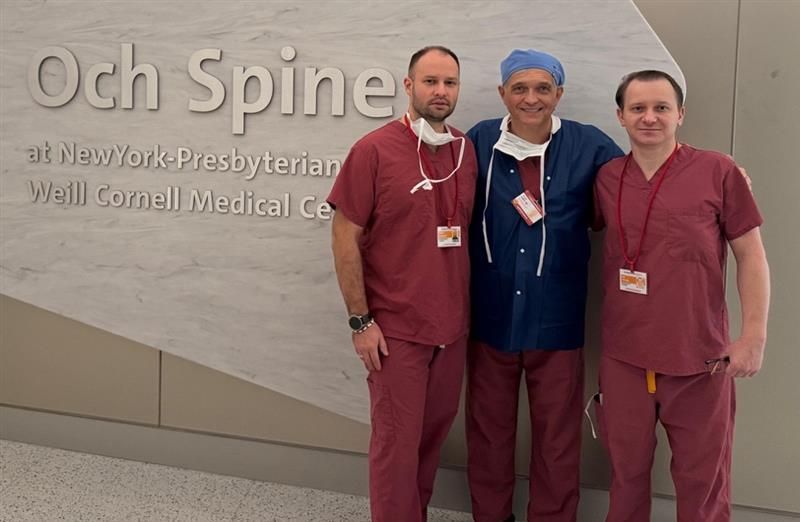
Dr. Hartl with Ukranian neurosurgeons Dr. Ruslan Aksyonov and Dr. Ihor Tysh
Written by Rebecca Lerner, Digital Marketing Manager
When Russian forces launched a full-scale invasion of Ukraine in February 2022, neurosurgeons Dr. Ruslan Aksyonov and Dr. Ihor Tysh watched their world transform overnight.
Both doctors had built successful careers at a large hospital in Kyiv. When the conflict started, they evacuated west to Lviv, starting over in unfamiliar hospitals while their country descended into war.
In Lviv, they helped establish a new neurosurgical department and began treating a transformed patient population now dominated by military personnel and civilians suffering trauma and blast injuries.
This month, Drs. Aksyonov and Tysh returned to Weill Cornell Medicine for their second observership with Dr. Roger Härtl, Hansen-MacDonald Professor of Neurological Surgery and Director of Spinal Surgery at Weill Cornell Medicine and Neurosurgical Director, Och Spine at NewYork-Presbyterian/Weill Cornell Medical Center. Their first visit in December 2019 proved transformative for Ukrainian spine care. Now, as their country enters its third year of conflict, they've come back to learn techniques that could save lives under the most challenging conditions imaginable.
Building on a Foundation of Collaboration

Dr. Härtl first welcomed the Ukrainian surgeons six years ago, providing them with complimentary access to his renowned New York City Minimally Invasive Spine Surgery course and hands-on training. During the course and observership, they learned tubular minimally invasive techniques that they brought back to Ukraine and shared with colleagues nationwide.
“Teaching and training others is a core mission in our department and at Weill Cornell Medicine,” said Dr. Härtl. Throughout his career, Dr. Härtl has remained committed to empowering surgeons across the world, from his work in Tanzania to intensive seminars with Open Medical Institute (OMI) held annually for a diverse cohort in Salzburg, Austria.
"After his contribution to our development in spine surgery, we developed a lot of useful skills which we started to do in Ukraine, mostly in spine tumor surgery," Dr. Aksyonov recalled. "We are so grateful to Dr. Härtl for his support at that time. We call him our mentor."
The impact extended beyond technique. Dr. Härtl's surgical philosophy of a minimally invasive approach and patient-centered methodology became integrated into their practice. Those principles remained constant, even as war disrupted their work and lives.
Learning Advanced Techniques for Challenging Conditions
Weill Cornell Medicine welcomed Drs. Aksyonov and Tysh back this year for a two-week observership to learn about Dr. Härtl's most advanced procedures, including robotic surgery, endoscopic techniques and augmented reality-assisted navigation systems. They're focusing on cases highly relevant to their practice: lumbar spine stenosis, cervical and lumbar disc herniations and fusion procedures.
"We're currently learning something new with robotic surgery and endoscopic approaches with augmented reality," Dr. Tysh explained. "Navigation systems allow us to be more precise during these surgeries."
They're also studying Dr. Härtl's outpatient clinic operations, observing how he examines patients and manages care. These insights will help them optimize limited resources back home.
Operating Under Fire
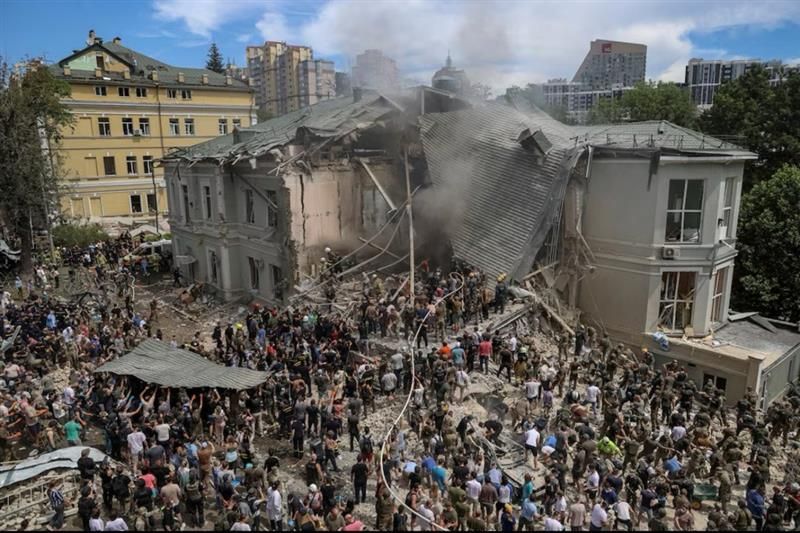
While they gain cutting-edge skills in New York, the reality back home remains stark. Ukrainian neurosurgeons like Drs. Aksyonov and Tysh now perform surgery knowing that Russian drone and missile attacks could strike at any moment.
"The main problem currently is the unpredictable situation," Dr. Tysh said. "Russia is launching drone attacks, and we unfortunately have experience with destroyed hospitals—public hospitals, children's hospitals and private hospitals."
The toll has been devastating: over 250 healthcare workers have been killed. Many more have fled abroad, creating potential staffing shortages.
Those who remain work through frequent blackouts, even during daytime hours when surgeries are scheduled. While most hospitals have now purchased diesel generators, the early months of infrastructure attacks created terrifying scenarios.
"We could be doing surgery and suddenly have no power supply to our equipment while the patient is under general anesthesia," Dr. Aksyonov recalled. "It was very dangerous for patients and staff."
Healthcare workers in Ukraine are dealing with struggles on multiple fronts. Many hospitals moved their operating rooms to basements for protection from shelling, and some struggle with heating during Ukraine's harsh winters. Access to advanced equipment like microscopes and navigation systems remains limited and expensive. The surgeons must often purchase instruments themselves or seek donations from international colleagues. But through all the challenges, doctors continue to provide the best possible care.
Looking To The Future
Dr. Härtl invited both surgeons to return for this year's course at no cost, continuing his commitment to supporting Ukrainian healthcare. “Teaching and training goes both ways, and we get as much out of this as they do,” said Dr. Härtl. “I admire their resilience, humility, positive attitude, resourcefulness and humanity under these adverse circumstances.”
The admiration and respect between the surgeons is clearly reciprocal and resonant throughout their learning together. "Dr. Härtl is always trying something new to make things better for the patient,” said Dr. Tysh. “His knowledge and his approach to new developments in spine surgery are amazing."
Despite the immense challenges, Drs. Tysh and Aksyonov remain hopeful. They envision organizing a conference in Ukraine once peace is restored and hope Dr. Härtl will visit their country.
"We would like to keep in touch with him because his knowledge and his approach allow us to perform more precise and safe surgery," Dr. Aksyonov said. "We'd like to continue to learn from him."
They're grateful for the international support Ukraine has received from European, American and Asian countries and they hold onto hope that the war will be over soon and there will be peace in Ukraine.
Until then, they return to Lviv not only with advanced techniques, but also with renewed determination and the assurance that the global medical community stands firmly with them.