

Weill Cornell Medicine provides a highly competitive, demanding environment for neurosurgery residents. Our seven-year program produces some of the top neurosurgeons in the country. About the Program
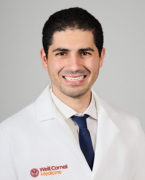
Albert Antar, MD
Full Bio
Albert Antar, MD, is a neurosurgery resident at Weill Cornell Medicine. He is a graduate of the Johns Hopkins University School of Medicine and earned his bachelor’s degree in Biology from Duke University.
During medical school, Dr. Antar completed a dedicated research year focused on spinal oncology, working under the mentorship of leading neurosurgeons. His research examined spinal metastases, neurosurgical education, and oncologic biomarkers, resulting in multiple peer‑reviewed publications. In recognition of his work, he was awarded the Harvey Cushing Medical Student Research Award.
Dr. Antar is deeply committed to advancing neurosurgical research and education. He has served as a mentor to premedical and medical students, with a particular focus on supporting underrepresented voices in medicine. As he begins his residency training, he looks forward to continuing his academic and clinical development within the Department of Neurological Surgery.

John Chae, MD
Full Bio
John Chae received his MD this year from Weill Cornell Medical College, where he was a member of Alpha Omega Alpha, the national medical student honor society. During his tenure at Weill Cornell, John was awarded the 2019 Siegel Family Student Prize for high academic achievement and leadership as well as the 2018 Marcus M. Reienberg, M.D. Award in Community Service. He received a Bachelor of Arts in chemistry from Williams College, where he was a member of Phi Beta Kappa. John has been an active member of the Weill Cornell Medicine AANS Neurosurgery Interest Group, where he twice directed the Medical Student Neurosurgery Training Camp, and helped organize a medical student publication group. John has served as a mentor with HPREP, designed to boost medical school enrollment rates of underrepresented groups. Among his research projects are several conducted under the mentorship of Dr. Jeffrey Greenfield on congenital brain malformations, including the creation of a novel pathophysiology-based classification system.

Sergio Guadix, MD
Full Bio
Dr. Guadix received his MD in 2023 from Weill Cornell Medical College, where he was a member of Alpha Omega Alpha, the medical student honor society. During his time here at Weill Cornell, Dr. Guadix has gotten to know the neurosurgeons well. He has conducted research in endovascular neurosurgery alongside Dr. Jared Knopman, worked on imaging studies in craniosynostosis with Dr. Caitlin Hoffman, and co-authored a series of academic papers on neurosurgery during Covid and another paper on stereotactic radiosurgery with Dr. Susan Pannullo.
Dr. Guadix took a year off from his medical studies to work under the mentorship of Dr. Mark Souweidane as the Rudin Medical Student Fellow in Pediatric Neuro-oncology, researching enhanced drug delivery systems for pediatric brain tumors. He was awarded the 2022 ChadTough Defeat DIPG Foundation Gamechanger Grant to continue those studies. Dr. Guadix received his bachelor’s degree in cognitive science from the University of Pennsylvania, then completed a yearlong post-baccalaureate pre-medical program at Johns Hopkins University before attending Weill Cornell Medical College.

Natasha Kharas, MD, PhD
Full Bio
Dr. Natasha Kharas received her MD and PhD degrees from McGovern Medical School at the University of Texas Health Science Center at Houston. A native New Yorker, Natasha earned her undergraduate degree in neural science (with highest honors) from NYU before enrolling in the MD/PhD program at McGovern, where she was elected to the medical student honor society Alpha Omega Alpha. Dr. Kharas has been working with Dr. Casey Halpern’s lab at Stanford University to examine the role of intracranial stimulation in epilepsy, and with Dr. David Sandberg at McGovern on a translational research project examining the safety and pharmacokinetics of injecting the chemotherapy drug panobinostat directly into the fourth ventricle to treat posterior fossa tumors in children. She received an NIH F31 grant for her PhD dissertation research, which examined the neural underpinnings of how sleep improves cognitive performance; she also performed research that examined the neural basis for how unconscious visual stimuli alter behavior.
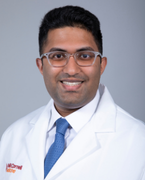
Neerav Kumar, MD
Full Bio
Neerav Kumar, MD earned his MD from Weill Cornell Medicine and his BA summa cum laude in Neuroscience and Molecular Biology from Princeton University, where he was elected to Phi Beta Kappa and Sigma Xi. Dr. Kumar was a member of Alpha Omega Alpha.
His research background spans two areas: AAV-mediated gene therapy for Parkinson's disease in the Kaplitt Laboratory and the impact of social determinants of health on neurosurgical outcomes, work that has yielded more than a dozen peer-reviewed publications and presentations at national conferences including AANS and CNS.
A Juilliard-trained clarinetist, Dr. Kumar founded Music Measures Inc., a nonprofit bringing music education to underserved youth.

Lily McLaughlin, MD
Full Bio
Lily McLaughlin received her MD in 2024 from Georgetown University School of Medicine, where she was a member of the Gold Humanism Honor Society. We met Lily last summer, when she completed a sub-internship month that showed her to be extremely talented, responsible, and committed to patient care. Prior to medical school, Lily earned a master’s degree in biomedical studies at Drexel University after completing her bachelor’s degree in biology at Villanova. She has co-authored numerous academic research papers, many of them with colleagues from Memorial Sloan Kettering, where she spent three years as a clinical research associate. She has researched and presented on healthcare disparities and participated in mentoring programs and community health initiatives.
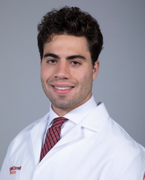
Robert John Oris III, MD
Full Bio
Dr. Robert (RJ) Oris joins the Department of Neurological Surgery at Weill Cornell Medicine as a first-year resident. He earned his medical degree from Northwestern University Feinberg School of Medicine and completed his undergraduate studies in biology at Brown University, where he was a leader on the Division I men's rugby team and a two-time Academic All-Ivy selection.
Dr. Oris brings a strong background in spine research, having served as lead clinical research fellow in the Department of Spine Surgery at the Rothman Institute in Philadelphia. His work — spanning imaging-based risk stratification, patient-reported outcomes and machine learning applications in spine surgery — has resulted in more than 20 peer-reviewed publications and numerous national podium presentations.
Prior to medical school, Dr. Oris worked on the front lines of the COVID-19 pandemic in urgent care centers across Connecticut. Throughout his training he has been a dedicated mentor and teacher, leading tutoring and mentorship programs for high school and undergraduate students in Chicago.
Outside the hospital, Dr. Oris trains in Brazilian Jiu-Jitsu and enjoys running, rock climbing, playing guitar and exploring new restaurants.

Kate Rosen, MD
Full Bio
Kate Rosen was raised by two teachers and grew up in Salem, Oregon, on a healthy diet of art museums, hiking trips, and Tom Petty. As an undergraduate she attended Santa Clara University, where she studied chemistry, biology, and public health while also working as a volunteer EMT. After graduating, she worked in quality improvement at Stanford Children's Health using clinical informatics and systems-based thinking to improve healthcare. She then received her MD from the Oregon Health & Science University School of Medicine, where she was a member of Alpha Omega Alpha, the national medical student honor society, and of the Gold Humanism Honor Society, which recognizes senior medical students for excellence in compassionate clinical care. Dr. Rosen has been a mentor to students under-represented in medicine and is one of the founders of The Differentialists, a student group formed to build diagnostic reasoning skills. Her research has included studying delayed cerebral ischemia after pituitary macroadenoma resection, and her study of fluid overload in pediatric ICU patients was named Best Abstract by a Trainee at the annual meeting of the American Academy of Pediatrics (AAP). She strives to specialize in neuro-oncology, with a focus on clinical trials and immunotherapy. In her free time Dr. Rosen likes to run marathons and climb mountains.
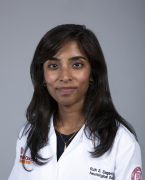
Ruth Saganty, MD
Full Bio
Ruth Saganty, MD, is a neurosurgery resident at Weill Cornell Medicine. She earned her medical degree from Rush Medical College, where she was inducted into the Alpha Omega Alpha Honor Medical Society and the Gold Humanism Honor Society. During her neurosurgery sub‑internship, Ruth distinguished herself through strong clinical skills, leadership, and a deep commitment to patient care, earning high regard from faculty and residents alike.
Ruth completed a master’s degree in biomedical science at Tufts University and received her bachelor’s degree in chemistry from Harvard University. She brings an extensive research background to her residency, having co‑authored numerous publications focused on glioblastoma treatment strategies, blood–brain barrier dynamics, and neurosurgical innovation.
In addition to her academic work, Ruth has been actively engaged in global health initiatives and mentorship programs. As a resident, she continues to pursue clinical excellence while advancing her interests in research, education, and compassionate patient‑centered care within the Department of Neurological Surgery.

David Sykes, MD
Full Bio
David Sykes received his MD in 2024 from Duke University School of Medicine, where he was a Medical Student Member of both the AANS and CNS and was awarded an AO Spine Young Investigator Research Grant Award. Before medical school, David earned his bachelor’s degree in biochemistry and music from Washington University in St. Louis. He has conducted clinical research in the spine division at Duke and has worked in the Brain Tool Lab, where medicine and engineering come together in the development of novel technologies. He has co-authored many peer-reviewed articles, primarily on spinal tumors, injuries, and degeneration, and has studied the use of advanced technologies such as augmented reality in neurosurgery. David completed a sub-internship with us last year and proved himself to be both talented and collaborative.